RTD Probe Sheath Material and Structure Selection Guide
Aug 25, 2026
The safest way to select an RTD probe is to match one documented construction to the process, not to apply a family maximum to every probe. In the Focusens FWZ Series source, SUS304 and SUS316 are listed housing materials. The family technical table lists -50 to +200°C, -50 to +350°C and -50 to +600°C ranges, plus a 10 s response entry labelled 0.63τ. Individual drawings are more specific: they show -50 to +200°C through -50 to +500°C, diameters from 3 to 16 mm, customer-defined lengths, and 20 or 30 s response entries in still air.
Those values are useful only with their original conditions. The FWZ pages do not provide a common t50/t90 comparison, a material-specific corrosion envelope, or an IP65/IP67 rating. Inconel 600, Hastelloy, a PTFE probe sheath and a mineral-insulated FWZ construction are also not listed as standard options in the reviewed FWZ pages. Treat those as engineered requests, not published Focusens specifications.

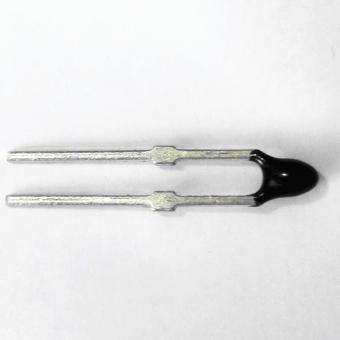
An RTD sensor is the resistance-based sensing element. An RTD probe is an assembly that can include the element, a sheath or housing, filler or insulation, extension leads and a connector or termination. TE Connectivity's RTD overview makes the same element-versus-assembly distinction.
This distinction affects every purchasing decision. A Teflon lead-wire option does not prove that the wetted probe has a PTFE sheath. A housing material does not define the cable limit. A terminal head rating does not automatically cover the gland, connector and installed assembly.
The Focusens FWZ ordering code lists Pt100, Pt1000, Cu500 and Ni element choices, DIN Class A, B, C or a special class, simplex or duplex construction, eight mounting categories, five wire-material categories and a customer-defined wire length. The technical table separately lists PT100, PT500 and PT1000. Confirm the final element and accuracy class on the quotation and drawing when these two source sections are used together.
| Selection field | FWZ source entry | How to use it |
|---|---|---|
| RTD element | Technical table: PT100, PT500, PT1000. Ordering code: Pt100, Pt1000, Cu500, Ni | Match the selected code to the controller input and approved drawing |
| Accuracy | DIN Class A or B in the technical table; Class A/B/C/special in the ordering code | Do not claim one class for every model; specify it in the order code |
| Housing | SUS304 or SUS316 | These are documented housing choices, but no separate temperature or corrosion envelope is assigned to either material |
| Family measuring bands | -50 to +200°C, -50 to +350°C, -50 to +600°C | Family-level choices; the selected drawing can have a lower maximum |
| General response entry |
10 s (0.63τ)
|
Preserve this exact definition; do not relabel it as t50 or t90 |
| Drawing-specific response | 20 or 30 s in still air | Compare only drawings tested and reported on the same basis |
| Insulation resistance | 100 MΩ | Confirm voltage, test method and acceptance criteria for the final assembly if they are contractual |
| Cable or wire material | PVC, Teflon, silicone/silicon latex and fiberglass; ordering code also lists metal braid shield | Cable material is not probe sheath material |
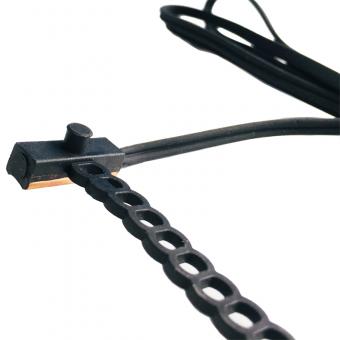
| Mounting | Tubular, surface, flange-shape, hat-shape tube, threaded, compression spring, pipe tie, armoured or custom | Request the exact mounting drawing and dimensional tolerances |
The public Focusens straight-pipe Pt100 product page also lists SUS304/SUS316, the 10 s (0.63τ) response entry and the same cable-material group. Because the live page contains several temperature statements for different contexts, the quotation should still identify the exact product code and drawing rather than using one page-wide maximum.
| Material or construction | Focusens FWZ status | Temperature and response status | Corrosion or application decision |
|---|---|---|---|
| SUS304 / SS304 | Listed as an FWZ housing | Use the range and response attached to the selected structure; no independent SUS304 maximum is stated | Suitable only after checking the actual medium, concentration, cleaning chemistry, welds and service temperature |
| SUS316 / SS316 | Listed as an FWZ housing | Same limitation as SUS304; the family maximum cannot be assigned automatically | Generic 316L guidance is useful where 304/304L corrosion resistance is insufficient, but chloride and stress conditions still need review; see the Alleima 316L material data |
| Inconel 600 | Not listed as a standard FWZ housing or sheath | No Focusens temperature or response value is available for this construction | Consider it as an engineered request for high-temperature oxidation or furnace-atmosphere service. Special Metals' alloy 600 bulletin describes those generic uses. A WIKA RTD assembly datasheet advises Inconel 600 above 600°C for that WIKA construction; this is not a universal threshold or a Focusens rating |
| Hastelloy C-276 | Not listed as a standard FWZ housing or sheath | No Focusens temperature or response value is available | Use the exact alloy grade only after a process-chemistry review. Haynes C-276 data discusses chloride-induced pitting and crevice corrosion under stated conditions; it does not prove Focusens availability |
| Teflon cable | Listed as an FWZ cable/wire option | No separate cable temperature limit is stated on the reviewed pages | Do not rewrite this as a PTFE wetted sheath |
| PTFE sheath | Not listed for FWZ | No FWZ range or response value is available | Request a section drawing that identifies the sheath, seals, filler and cable separately |
| Mineral-insulated construction | Not listed in the FWZ ordering code | No FWZ range or response value is available | The catalogue lists mineral-insulated MgO under a thermocouple ordering code on another page; that does not establish an FWZ RTD option |
Use SUS304/SUS316 when transcribing the Focusens source. SS304/SS316 can remain in search copy as familiar aliases, but the quotation and drawing should carry the exact material designation used by engineering.
There is no universal temperature at which every RTD probe must switch from stainless steel to Inconel 600. The decision depends on the complete assembly, atmosphere, oxidation cycle, contaminants, pressure, vibration, sheath wall, joining method and required service life. Inconel 600 becomes a serious candidate when the application combines high temperature with oxidation or furnace-atmosphere exposure and the selected stainless steel construction is not suitable.
For an FWZ enquiry, provide the normal temperature, peak temperature, time at peak, atmosphere, process chemistry, pressure, velocity, vibration and cleaning cycle. Ask Focusens to return the exact alloy designation, drawing revision and supported operating limit. Until that response is issued, Inconel 600 remains a custom request.
The following values are transcribed from FWZ drawings on PDF pages 21-22 of the supplied Focusens catalogue. A, L and other letters are drawing dimensions; they should not be renamed as insertion length, overall length or sensitive length without the controlled drawing.
| FWZ drawing context | Dimensions shown | Temperature range shown | Response entry |
|---|---|---|---|
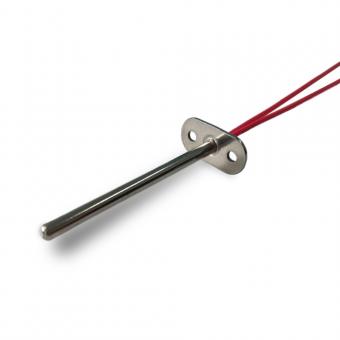
| Straight style | D: Ø4-8 mm; A: 15-1000 mm; L: by customer requirement | -50 to +200°C | 20 s in still air |
| Alternative straight style | D: Ø4-8 mm; A: 30-500 mm; L: by customer requirement | -50 to +250°C | 20 s in still air |
| Custom housing style | L: 30-55 mm; L1: by customer requirement | -50 to +250°C | 20 s in still air |
| Handle-operation style | D: Ø4-8 mm; A: 30-500 mm; L: by customer requirement | -50 to +350°C | 30 s in still air |
| Industrial equipment/components style | D: Ø6 mm; A: 20-227 mm; L: by customer requirement | -50 to +350°C | 30 s in still air |
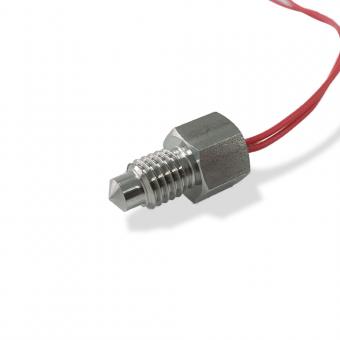
| Threaded fastening style | D: Ø3-8 mm; A: 30-500 mm; L: by customer requirement | -50 to +350°C | 30 s in still air |
| High-temperature threaded style | D: Ø3-16 mm; A: 100-500 mm; L: by customer requirement | -50 to +500°C | 30 s in still air |
| High-temperature cable style | L: by customer requirement | -50 to +300°C | 30 s in still air |
| Hose-clamp style | A: 250-1400 mm; L: by customer requirement | -50 to +500°C | 20 s in still air |
| Head-style high-temperature drawing | D: Ø3-8 mm; A: 250-1400 mm; L: by customer requirement | -50 to +500°C | 30 s in still air |
The threaded drawings show examples including M8x1, M12x1, M14x1, M16x1.5, G1/4 and G1/2. The head-style drawing shows M20x1.5 and NPT1/2 markings, but the reviewed page does not state the head material, terminal arrangement, transmitter compatibility or IP rating.
Ø4.5 mm is not shown as a standard FWZ diameter on these pages. It may fall within a displayed diameter range, but that is not the same as confirming an available standard size. Request the exact outside diameter, tolerance, sheath wall, sensitive length and response result on the quoted drawing.

Do not subtract the catalogue's 10, 20 and 30 s entries as if they were one controlled test series. The general row says 10 s (0.63τ). Selected drawings say 20 s in still air or 30 s in still air. The source does not give one test medium, flow velocity, temperature step, immersion, diameter and t50/t90 definition for all three values.
A valid comparison request should contain:
If two proposals use different response definitions or media, mark them not directly comparable. A smaller diameter often changes the thermal path, but this article does not assign a guaranteed speed advantage to Ø3, Ø4.5 or Ø6 mm without a common test.
Start with the required sensing position, not a catalogue maximum. The sensing region must reach representative process temperature while the assembly still has enough clearance for installation, flow, thermal expansion and removal. In a pipe, provide the internal diameter, wall thickness, flow direction, velocity, nearby fittings and thermowell design. In a tank, provide the fill range, agitation, stratification, heater location and cleaning access.
Keep these dimensions separate on the RFQ:
There is no universal insertion-depth formula that fits every RTD construction. An Endress+Hauser RTD technical document gives different minimum immersion values for different thermowell constructions and notes that process temperature, pressure, velocity, immersion length, material and medium all affect thermowell limits. Use that as general engineering context, not as a Focusens dimension.
The FWZ ordering code includes compression spring installation type, so spring loading is a documented configuration category. The reviewed FWZ page does not state spring travel, preload, contact force, temperature limit or the exact mechanical purpose for every design.
In a thermowell assembly, spring loading is commonly used to keep the measuring insert in positive contact with the bottom of the thermowell bore. WIKA states this function for its spring-loaded TR10-2 RTD assembly. That generic function explains why the option exists, but it is not a Focusens performance guarantee. For FWZ, request the spring travel, preload, stack-up tolerance, mounting interface and approved drawing.
An IP rating belongs to the tested enclosure or complete assembly named by the source. It cannot be transferred from a transmitter box, connector or another sensor family to an FWZ probe.
| Focusens source or family | IP evidence in the supplied material | RTD selection boundary |
|---|---|---|
| FWZ Series RTD Sensor | No IP65 or IP67 rating is stated on pages 21-23 | Specify the required rating and ask for the complete rated assembly and test basis |
| FRT outdoor temperature sensor/transmitter | IP65 per EN 60529, excluding FRT23; RTD PT1000 is listed as a sensing option | Applies to the stated FRT assembly, not to an FWZ probe or separate connection head |
| MFE-1 overmoulded sensor page | Introductory text mentions NTC/RTD elements and IP67 standard/IP68 on request, while the technical table identifies an NTC sensing element | The RTD scope is ambiguous; require a current RTD order code and drawing before using the IP claim |
IEC 60529 is the governing enclosure-protection standard referenced by the FRT source. In the IP code, the first digit 6 denotes dust-tight protection; a second digit 5 concerns water jets, while 7 concerns immersion conditions. These are different tests. Schneider Electric notes that an IP67 result should not automatically be treated as proof of a different water-jet rating; see its IP66/IP67 test explanation.
For a connection head, state the actual exposure: indoor dust, outdoor rain, washdown jets, condensation, temporary immersion, cleaning chemicals, ambient temperature and installation orientation. Ask the supplier to identify the head, cover seal, cable gland, connector, thread, probe entry and cable that are included in the rating. If any one part changes, the assembly rating may need a new review.
| RFQ field | Buyer input | Supplier response required |
|---|---|---|
| Process | Medium, concentration, pressure, flow, vibration and cleaning | Material and construction recommendation |
| Temperature | Minimum, normal, maximum continuous and short-duration peak | Supported range for the exact assembly |
| Element | Pt100, Pt500, Pt1000, Cu500 or Ni; required curve and input | Exact element code, curve and accuracy class |
| Housing/sheath | SUS304, SUS316 or engineered alloy request | Exact material designation and where it is used in the assembly |
| Response | t50/t63/t90 target and complete test condition | Result for the quoted drawing on the same basis |
| Diameter | Required outside diameter or maximum envelope | Diameter, tolerance, wall and sensitive length |
| Length | Mounting reference, insertion, sensitive zone and clearance | Controlled dimensioned drawing |
| Mounting | Tubular, surface, flange, threaded, spring-loaded, clamp or custom | Mounting code, dimensions and materials |
| Cable | Insulation, conductor, gauge, shielding, length and exit direction | Cable construction and temperature limit |
| Connection head | Terminals, cable entry, transmitter and service access | Exact head and transmitter configuration |
| IP requirement | Dust, rain, jets, immersion and installation orientation | Written rating, standard and complete assembly covered |
| Approval documents | Datasheet, drawing, response method, material document and test report | Document numbers and revision status |
The supplied FWZ source lists SUS304 and SUS316 housing. It lists Teflon as a cable/wire material, not as a PTFE probe sheath. Inconel 600, Hastelloy and a mineral-insulated FWZ RTD construction are not listed on the reviewed FWZ pages.
The source does not assign a separate maximum to each housing material. The family technical table lists ranges ending at +200°C, +350°C and +600°C, while the reviewed drawings end at +200°C, +250°C, +300°C, +350°C or +500°C depending on structure. Use the limit attached to the selected drawing; do not assign +600°C to every SUS304 or SUS316 probe.
The available entries are not a controlled t50/t90 comparison. The general table lists 10 s (0.63τ), while drawings list 20 or 30 s in still air. Request one response definition and one test condition before calculating a difference.
No universal threshold applies to every RTD. It is an engineering candidate for some high-temperature oxidation and furnace-atmosphere applications when stainless steel is unsuitable. Focusens availability and the permitted range require a written custom response.
Define the representative sensing position, process geometry, thermowell, flow, clearance and service access. Then request a drawing that separates insertion length, overall length and sensitive length. Do not copy a depth from another probe.
Choose the required tests from the real exposure. IP65 addresses dust-tight construction and water jets; IP67 addresses dust-tight construction and immersion conditions. Require the rating for the complete installed head, gland, connector, probe entry and cable. The supplied FWZ pages state neither rating.
The FWZ code confirms a compression-spring installation category. In thermowell systems, spring loading commonly keeps the insert against the thermowell bottom, but the FWZ travel, preload and performance must be defined by its own drawing.
To request a selection review, send the completed RFQ fields through Focusens Contact Us. Ask for the current product code, controlled drawing, material callout, response definition and IP evidence before approving production.
Focusens product values in this guide were transcribed from the supplied Focusens Catalogue.pdf, FWZ Series RTD Sensor pages 21-23 in PDF numbering, and checked against the supplied FRT product sheet where IP65 is discussed. Public engineering links provide general material, immersion, spring-loading and IP-code context; they do not expand Focusens product availability.
No.1 XiSan Road, Electromechanical Industry Park , High&New Tech.Zone. Hefei,Anhui,China
teléfono : +86-551-69109668
Whatsapp : +86-13339100504
Email : info@focusens.com
Skype : melodyliu520






 +86-551-69109668